
The international human rights’ framework and the role of international organisations are being put to a test, which has reached its climax with the conflict in the West Bank, recently extending to more countries in the Middle East. But, while we may question the fairness and efficacy of the institutions, it seems to me that human rights’ principles are more relevant than ever and can even help guiding us in the necessary change we must inevitably make.
Article 1 of the Universal Declaration of Human Rights states that “All human beings are born free and equal in dignity and rights. They are endowed with reason and conscience and should act towards one another in a spirit of brotherhood (1).” Article 2 goes then to explain that all rights set out in the Declaration are applied to all without discrimination of any kind. In theory, no one would argue against the principle set forth in Article 1. However, the truth is that over the last decade inequalities have risen everywhere and it is difficult for millions of people around the world, even in Europe, to live a dignified life. The gap between richer and poorer has never been so wide. As an example, in France, it is estimated that in 2010, the fortune of the 500 richest people in the country was the equivalent of 10% of the Gross Domestic Product and in 2023 it was the equivalent of 45% (2). In a context of climate change, equality and dignity have never been so relevant.
Governments are accountable for all of their citizens and they must rise to the social changes and the greatest challenges of times, which today include the rising inequalities and climate change. All public policies should take into account the specific needs of all groups of the population and of the consequences of climate change. To support this goal, one tool commonly used in human rights-based programming is impact assessments, meaning the assessment of the impact of a given policy on the fulfillment of human rights. In order words, whether the expected policy will have a positive, neutral or even a negative effect on people’s lives. I would like to take as an example transport policy, namely the availability of free public transport, in general, and the train, in particular. I have decided to use such a policy as an example, because most people in Europe, both children and adults alike, use transport daily in order to access school, employment, social and health services and, additionally, to go on holidays.
In 2013, the municipality of Tallinn in Estonia made public transport free for all Tallinn residents, becoming one of the first cities to do so (3). In Spain, a free travel pass for frequent travellers was introduced in 2022 as an initiative to alleviate the economic crisis and encourage the people to use public transport; and, at the same time, as a means to discourage the use of private transport (4). The pass is still available today, covering both short and medium distances. It imposes travellers to undertake at least 16 trips every four months in order to benefit from the pass, thereby encouraging its use (5). Again, the idea behind this is, the more people will be able to use public transport in an effective manner to reach school or work, the less they will rely on and use private transport, which contributes in a much more significant way to greenhouse gas emissions. For example, the European Commission calculates that passenger cars account for 61% of total Carbon dioxide emissions (CO2) from European Union road transport (6). To use another metrics, the UK Department for Transport estimates that “a petrol car journey from London to Glasgow emits approximately 4 times more CO2 per passenger than the equivalent journey by coach (7).”
Other countries have adopted policies to make free transportation nation-wide. This was the case of Luxembourg, where public transport became free in 2020, across the country, including for visitors and commuters living outside the country’s borders (3). Among the reasons for adopting such a policy were reducing inequalities and improving the environment. Other countries, such as Slovakia and the Czech Republic introduced 100% fare discounts for children, students, and pensioners for railways from November 2014; and 75% discounts for children, students, and pensioners for both trains and buses from September 2018, respectively. Behind these policies, were also mainly social concerns (8).
In Europe, the programme DiscoverEU has been offering free rail passes to young people aged 18+ with the purpose to enable them to “explore the diversity of Europe, its cultural heritage and history, connect with people from all over the continent and ultimately discover themselves.” In 2026, 40.000 free passes were attributed to young people. From 2027, the United Kingdom will also be included in the programme (9).
The results from all the above initiatives are mixed and show that planning and implementation of such policies should take into account the complexity of use of transport, as well as, the specific needs and awareness of social groups. For example, a study on transportation at European level found that half of the respondents were not willing to pay more for more sustainable modes in daily mobility because they would not be able to afford it, showing that affordability is an important dimension. The results on willingness to pay more for sustainable modes of transport in long-distance journeys also provide food for thought. Concerning this specific type of transportation, half of the respondents said they were willing and the other half said they would not willing to pay. However, there are significant differences between age and socio-economic groups, with younger people being more willing to pay more for environmentally-friendly transportation and people with higher income being more concerned with speediness, rather than environmental impact (3). This means that social awareness and understanding of behaviour also plays an important role in transportation planning.
Success examples, such as from the French city of Dunkirk, show that in order to substantially increase use of public transport, affordability has to be linked to availability and accessibility, including an effective and reliable network (10). And free transportation for long distance can also be an incentive for more people, especially those of a poorer background, to travel.
Poor transport infrastructure can contribute to social inequalities in different ways. For short distance, lack of available, accessible and affordable transport may prevent people from accessing work, education and health and social services. For medium and long distance, lack of affordable transport means that fewer people of low socio-economic backgrounds will have access to travel, including during holidays.
Two questions remain: does long distance, free public transportation contribute to the increase of use of energy that might not otherwise been used, thus stressing climate resources (or does it, in fact, help to reduce the effects of climate change)? And is long distance travelling important for overcoming inequalities?
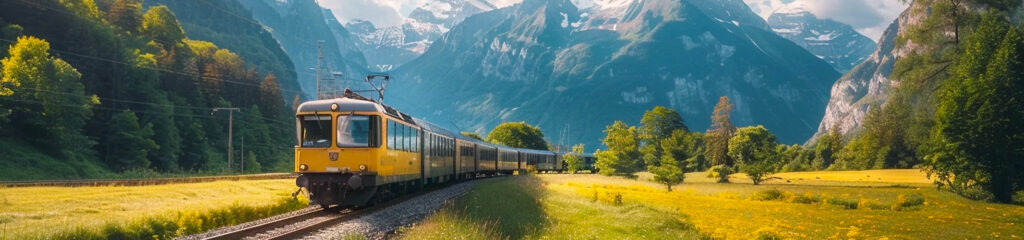
We are living a time where we need to learn to live differently and most people cannot see what different could look like. The words less or reduce cause immediate tension not only among private companies and governments, but also the average citizen. Therefore, the times demand us to go out there and explore and what better than a long train ride to do so. For many people today, the concept of spending ten hours doing very little may seem almost extravagant, but that is already a good start. Picking a book to read after one has not read for twelve months or maybe even more, talking with a complete stranger, and, at the end of the journey, finding a new country, people, different flavours and behaviours. When we travel, we rest and have fun, but we also meet different cultures and by doing so, become more open and tolerant to others and the world is in desperate need of tolerance. And while we travel, we may write new stories, of friendships unimaginable and peace.
Opening ourselves to other cultures and other habits, including more affordable and environmentally-friendly ways of transportation may help to create the change in culture and mentalities necessary to reverse the effects of climate change. Free, long-distance transport is one of those policies that seems impossible before it is done and which, with time and distance, may undoubtedly become fully supported by all, to the extent to which one day it will be impossible to imagine a world before it. Two decades ago, Paris pollution levels breached those imposed by the European Union. 20 years later, the change attributed in great part of the policies by mayor Hidalgo is remarkable. Pollution levels have decreased by 50 per cent, more than half of the population uses public transport for travelling between the home and work and the use of bicycles has progressively increased due to better lanes and traffic organisation. In 2024, Parisians voted to triple SUV parking fees and, according to the World Economic Forum, the city plans to remove 60,000 parking spots by 2030, converting them into green spaces (11).
In the face of climate change, the value of dignity must be central to any action undertaken and all policies must open opportunities for more equality and introduce the lifestyle changes, without which sustainability on Earth will not be possible. Transport policy, in particular free transport for all citizens for short, medium and long-distance travel is one such examples where it is possible when given the priority and its impact for people and the environment can be remarkable.
Translated from English to Portuguese and French with Deepl.com (free version)
References
(1) United Nations (1948) Universal Declaration of Human Rights
(2) Les 500 plus grandes Fortunes de France cumulent 1.170 milliards d’euros en 2023, du jamais-vu. Last accessed 26 May 2026
(3) European Commission (2022) Study on the social dimension of the future EU transport system regarding users and passengers. Final report
(4) Daniel Albalate, Mattia Borsati and Albert Gragera Free rides to cleaner air? Examining the impact of massive public transport fare discounts on air quality. Economics of Transportation 40 (2024) 100380. https://doi.org/10.1016/j.ecotra.2024.100380
(5) Abonos gratuitos cuatrimestrales en Cercanías Asturias y Cercanías Cantabria. Last accessed 26 May 2026
(6) European Parliament. CO2 emissions from cars: facts and figures (infographics). Published: 22-03-2019, Last updated: 06-12-2024 – 15:16
(7) UK Department for Transport. Official Statistics. Transport and environment statistics: 2023 (2021 data).
(8) Tomeš, Z., Fitzová, H., Pařil, V., Rederer, V., Kordová, Z., Kasa, M., 2022. Fare discountsand free fares in long-distance public transport in central Europe. Case Stud. Transp.Policy 10 (1), 507–517.
(9) DiscoverEU Infographics. Last accessed 26 May 2026
(10) Observatoire des villes du transport gratuit (2019) Le nouveau reseau de transport gratuit à Dunkerque: de la transformation des mobilitésaux mutations du territoire.
(11) World Economic Forum. Paris has cut air pollution by half. Here’s how. Last accessed 26 May 2026