

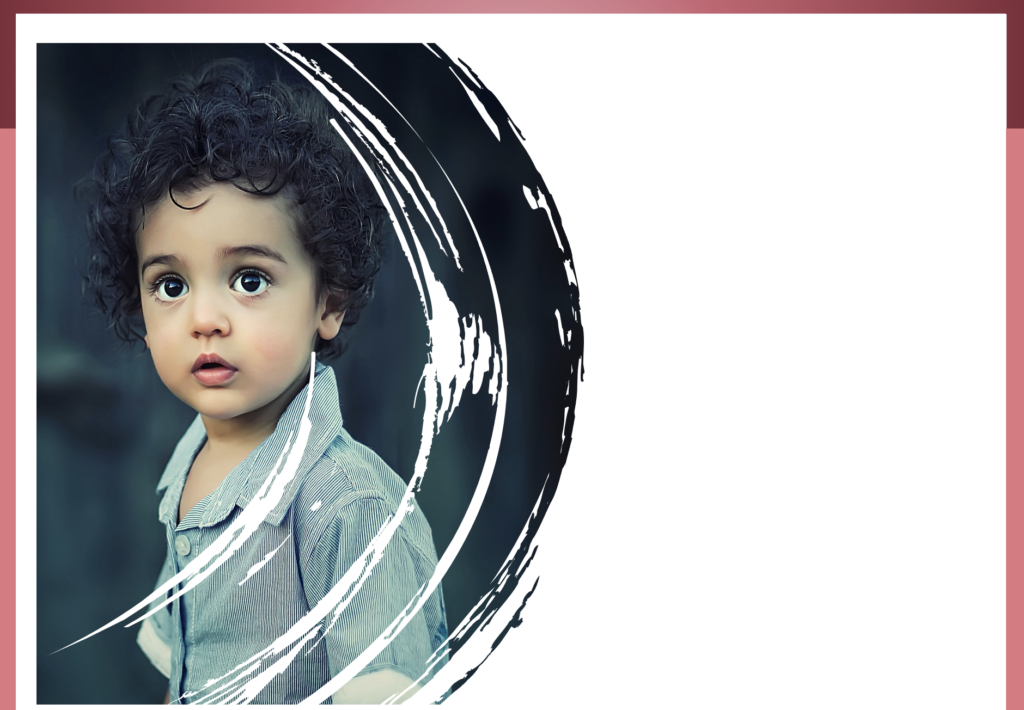
“Each child that is born is a surprise to humanity.”
Vea Vecchi, Reggio Emilia
In O Começo da Vida
The Beginning of Life
All public policy must begin with the child as an individual, as a mystery, a surprise, inspired by their human potential, and based on their own opinions and desires. Childhood is not a preparatory stage for adulthood; children are, they exist, they feel, they live. From birth, children have common needs, known as basic needs, such as nutrition, care and appropriate housing, but they also have individual needs, and public policy cannot ignore this fact.
In 1990, with the ratification of the United Nations Convention on the Rights of the Child, the Portuguese government, like the other Member States, recognised children as legal entities, which had an enormous impact on public policy, both in terms of its vision and in terms of its practical implementation. The Convention aims at the holistic development of the child, i.e. their physical, mental, spiritual, moral and social well-being. In addition, other articles show us how to guide public policies for children, including in health contexts.
Article 29(1) recognises that “States Parties agree that the education of the child shall be directed to (a) The development of the child’s personality, talents and mental and physical abilities to their fullest potential.”
Article 12 states that “(all children have) the right to express (their) views freely in all matters affecting the child, the views of the child being given due weight in accordance with the age and maturity of the child.”
It should be noted that over the decades, Article 12 has gained more weight in all aspects of children’s lives, including health. Examples of this are regulations related to children’s right to informed consent for therapeutic or diagnostic acts and the right of children to participate in the evaluation, development and improvement of health services (1).
Therefore, according to the Convention, it is essential to adopt policies that take into account children’s rights, needs and opinions. I would like to go further and suggest that we should also measure children’s well-being through their happiness, personal fulfilment, or satisfaction with life. Public policies must be ambitious, because it is only by seeking values, ideals, and dignified and better living conditions for all children without discrimination that sustainable results can be achieved.
If we consider the Convention’s vision as a premise for the design, implementation, and evaluation of the impact of public health policies, it is essential to understand, on the one hand, what conditions can promote children’s well-being and holistic health and, on the other hand, what conditions or life experiences can have an adverse impact on children’s lives. For example, evidence shows that, on the one hand, adequate health, nutrition, safety and protection, responsive care and early learning promote the holistic development of children (2). On the other hand, adverse experiences in childhood, such as neglect and physical, mental, emotional or sexual abuse, can have a negative short-term impact, such as biological changes in brain development and the immune system, and a long-term impact on educational outcomes, chronic disease, poverty, unemployment and other risks (3).
The health system plays a fundamental role and has a significant impact throughout a child’s life, in terms of promoting health and preventing adverse experiences, and for this reason, it goes far beyond the treatment and management of disease. Even during pregnancy, the health system plays an important role in foetal development, in terms of preparing for and ensuring the quality of childbirth and in monitoring the newborn, the mother and the family. Then, during the first five years of life, the health system plays an important role in early detection and intervention in childhood, the detection and monitoring of chronic disease, risk and danger factors, and others, throughout childhood and into adolescence, including monitoring sexual and reproductive health. Well-being visits are an example of continuous intervention by health services that require adequate planning based on evidence and principles of rights and health promotion.
Furthermore, the International Commission on Social Determinants of Health recognised that “the healthcare system is itself a social determinant of health, influenced by and influencing the effect of other social determinants (4).”
If we look at some of the main indicators of child and youth health in Portugal, including trends over recent decades, we can see that some public policies have had a lasting positive impact, while other indicators show some difficulty in counteracting trends. For example, since the 1960s, there has been a real effort on the part of the health system to create the conditions for a reduction in child mortality; these efforts have been maintained over the decades and, even today, Portugal has one of the lowest child mortality rates in the European Union. On the other hand, it is possible to demonstrate that there are areas of child health where efforts have not been prioritised in the same way, to the detriment of children’s health outcomes. For example, in terms of overweight and obesity among children, rates remain high and have varied little over the years, both in Portugal and in other European countries.
In addition, public policies must also have an element of resilience and anticipation in relation to new challenges, such as the COVID-19 pandemic, climate change, or the impact of digital technology on the health of children and young people. Other issues that may affect Portuguese and European children in the near future include increasing inequalities, rising living costs and global economic instability, and the anxiety about climate change expressed by children and young people.
In this sense, “good public policies” are crucial and the responsibility of the health system must be recognised. Evidence and experience show that:
- Good public policies can help manage and counteract fundamental trends in children’s health;
- Early investment in children produces the highest returns in human capital;
- Evidence shows the economic return on investment in vaccination, prevention of childhood obesity, child and adolescent mental health, etc.
Furthermore, investment in children by States “to the maximum extent of their available resources” is a fundamental right of all children (Article 4, CRC) (5).
To reinforce the idea of good public policies and by way of example, between 2008 and 2012, in the midst of the economic crisis, 6.6 million children fell into poverty in the 41 richest countries in the world. In its study on child well-being and poverty, UNICEF’s Research Office showed that ‘in the midst of this unprecedented social crisis, many countries managed to limit — or even reduce — child poverty. It was therefore not inevitable that children would be the most enduring victims of the recession (6).’
As mentioned above, Article 4 of the CRC requires States Parties to take ‘all appropriate legislative, administrative and other measures’ to implement the rights contained therein. In addition, the Committee on the Rights of the Child has identified a wide range of measures necessary for effective implementation, including the development of special structures and monitoring, training and other activities in government, parliament and the judiciary at all levels (7). Legislation, policies and programmes must be implemented systematically and create a culture of compliance with children’s rights throughout the system, including with the aim of changing social norms.
The World Health Organisation proposes a child rights-based approach to public health policies that allows children to be viewed as individuals, taking into account their needs and characteristics, while at the same time combating inequalities (8, 9). Such an approach requires an adequate governance and planning system based on children’s rights. For example, in addition to disaggregated statistical data on children’s health, it is imperative to analyse legislation, policies, strategies and standards, as well as the impact of policies on the situation of children. This information should serve as a basis for the preparation of strategies, plans and budgets, with a focus on vulnerable populations. Mechanisms for children’s participation should be in place, including to ensure their participation in the design and evaluation of services and programmes. At the implementation level, there should be sufficient human resources and health services to ensure:
- Access to services for all children without discrimination;
- Compliance with children’s rights;
- Quality of services;
- Access to information.
There should also be structures in place for monitoring and evaluating the quality and impact of health services and accreditation systems for the continuous improvement of programmes and services.
In conclusion:
- Public policies can have a significant impact, both positive and negative, on children’s lives throughout their childhood and into adulthood.
- Public policies must create a culture for children’s rights.
- Public policies are a matter of law.
Políticas públicas em saúde Ana Guerreiro
Public policies in healthcare Ana Guerreiro
References
(1) United Nations Committee on the Rights of the Child. General Comment No. 12 (2009) The right of the child to be heard, CRC/C/GC/12. United Nations
(2) Black, Maureen M et al. Early childhood development coming of age: science through the life course. The Lancet, Volume 389, Issue 10064, 77 – 90
(3) WHO (2023) Tackling Adverse Childhood Experiences (ACEs) State of the Art and Options for Action. World Health Organization Regional Office for Europe
(4) CSDH (2008). Closing the gap in a generation: health equity through action on the social determinants of health. Final Report of the Commission on Social Determinants of Health. Geneva, World Health Organization.
(5) United Nations Committee on the Rights of the Child. General Comment No. 5 (2003) General measures of implementation of the Convention on the Rights of the Child (arts. 4, 42 and 44, para. 6). United Nations
(6) Innocenti Report Card 19. Child Well-Being in an Unpredictable World
(7) Maria do Céu Machado, Ana Isabel F. Guerreiro e Sónia Borges Rodrigues (editoras). Os Direitos da Criança em Contextos de Saúde. Publicações Almedina. 2024
(8) WHO (2015) Operationalizing human rights in efforts to improve health. Knowledge summary: women’s, children’s and adolescents’ health N. 34. World Health Organization
(9) OHCHR (2014) Technical guidance on the application of a human rights-based approach to the implementation of policies and programmes to reduce and eliminate preventable mortality and morbidity of children under 5 years of age

 English
  Portuguese
  French