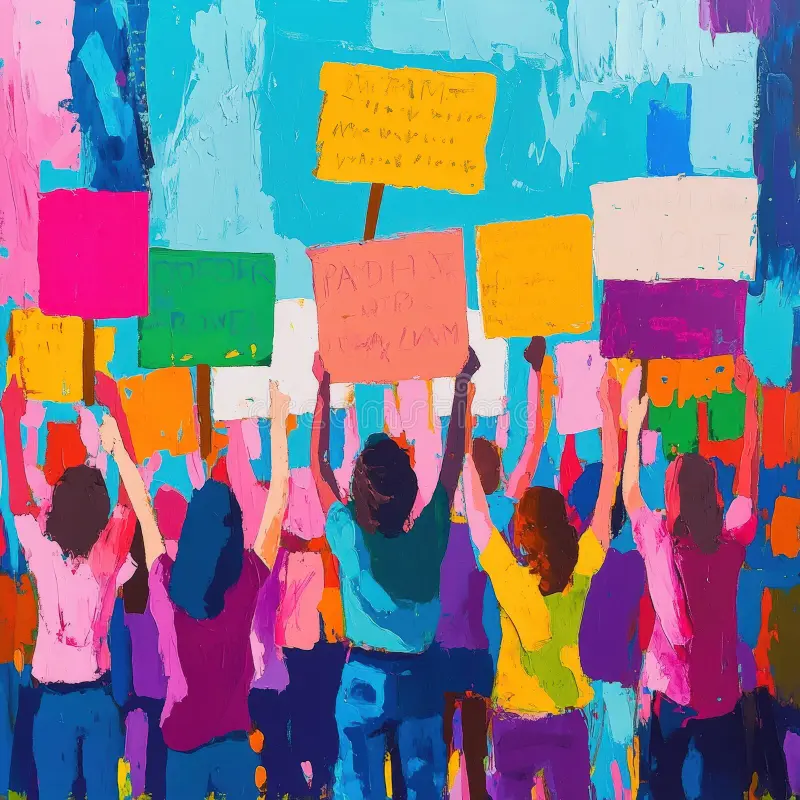
In late September, students at a secondary school in the outskirts of Paris began to speak out about the extremely poor conditions in which they were studying – ranging from the physical state of the buildings, classrooms and toilets, and hygiene standards, to the lack of heating during the winter and the prolonged shortage of teachers for subjects such as French and mathematics in the final year of secondary school. Other schools across the country joined the first one in protest. In response, rather than meeting with the pupils straight away and listening to their demands, the government sent in riot police. On television, the focus was mainly on the violence directed at the police. In the first few days, around 5,000 people, mostly young people, were remanded in custody. As these young people are aged between 15 and 17, they are, in the eyes of the law and in terms of their rights, children.
Within a few days, a national solidarity movement had emerged. Schools in deprived areas were joined by those in more affluent areas. In Paris, schools from the north and south of the country came together. The children were joined by teachers, parents, lawyers, mayors and others.
This movement speaks of a conscious generation that fears for its future, but is not yet ready to give up. And the reactions to the young students’ demonstrations speak of a society where democracy has been gradually eroded, almost silently. But they also speak of a people who are weary, certainly, but not asleep. There are many lessons to be learnt from this movement.
On the right to education: The students have mobilised precisely in defence of their right to education for the reasons outlined above. The right to education encompasses both quality and the objectives of education, and their demands are just.
On the right to participation: according to the United Nations Convention on the Rights of the Child, which has been ratified by all European countries, all children have the right to be heard and to express their views on all matters affecting them. This right means that children’s views must be taken seriously into account when decisions are made. The secondary school students’ movement in France shows that children have well-founded views on matters relevant to their own lives, including their education. The students’ ten demands include, amongst others, the refurbishment of school buildings, the recruitment of school staff (teachers, healthcare staff and others), a rethink of school timetables, and effectively allowing secondary school students to participate in decisions concerning their student life.
On the right to protest: All citizens have the right to assemble and demonstrate. The authorities may only break up a demonstration (whether notified or not) if acts contrary to the law are committed. Any unlawful acts committed by the authorities are themselves against the law.
On the right to protection from all forms of violence: In most European countries, all forms of violence against children are criminalised, including all forms of punishment, such as hitting, in all contexts of their lives (i.e. in the home, school and public spaces).
All aspects of the student movement – from the reasons behind their demands, to the subsequent organisation of demonstrations, the government’s reactions, and the solidarity that has emerged – reflect the worsening of people’s living conditions, including educational conditions, the rise in social inequalities and the collapse of democracy.
It must be remembered that governments are elected to represent the interests of all their citizens, without discrimination of any kind. Laws must be enforced. In the face of injustice, government ineffectiveness or other discontent, citizens of all ages have the right to assemble and demonstrate without repercussions, and their views must be taken into account. We live in states governed by the rule of law, and we must stand up for these very rights to ensure that what has taken so much time and effort to build is not lost.
Translated from Portuguese to English and French using Deepl.com (free version)